The two systems inside every modern key
A modern car key combines two electronically distinct systems that look like one device. The first is the RKE remote — the buttons that lock and unlock your doors, controlled by a UHF radio at 315 MHz (or 433 MHz on some 2020+ vehicles). The second is the immobilizer transponder — a passive low-frequency chip in the head of the key that authenticates the engine start, controlled by a 125 kHz LF antenna ring around your ignition cylinder (or, on push-button vehicles, around the start button or steering column).
These two systems pair separately. A successful "fob programming" usually means both succeeded; a frustrating "the doors lock but it won't start" usually means the RKE side paired and the immobilizer side did not. The most common cause of this failure mode is buying an aftermarket fob with the wrong transponder chip family for your vehicle. Check the chip family before you buy, every time.
Onboard ignition-cycle procedures
For vehicles roughly 2002–2017 across most manufacturers, the immobilizer can be put into a "learn mode" by a specific sequence of inputs — usually inserting an already-paired key into the ignition and cycling it through ON/OFF a precise number of times within a strict timing window. While in learn mode, the immobilizer accepts new transponder identities for a few seconds; pressing any button on a new fob writes its chip ID into the immobilizer's allowed list.
Onboard procedures are inexpensive (no scan tool required) but require at least one already-paired working key to enter learn mode. They're also model-year-specific to the second — off-by-one ignition cycles or missed timing windows abort the procedure and you have to start over.
OBD-II scan-tool pairing
For 2017+ vehicles with proximity smart keys, and for any vehicle in an "all keys lost" scenario, you need a programmer that can talk to the immobilizer over the OBD-II port. The programmer reads the vehicle's security PIN (sometimes called a "seed" or "incode") from the body control module, then writes a new transponder identity directly into the immobilizer's memory.
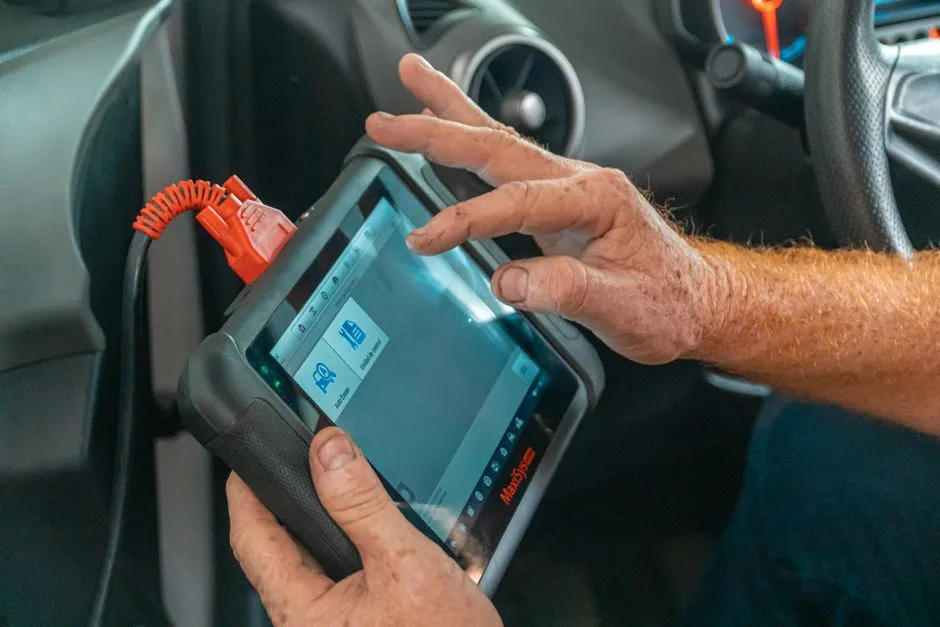
This is what aftermarket programmers like Autel IM608 Pro, Xhorse VVDI Key Tool Plus, AutoProPAD G2, and Smart Pro exist to do. Each programmer has different per-OEM coverage; our programmer hub publishes honest compatibility ratings.
Modern AES-128 chips and why they changed the game
From roughly 2017 onward, the chip families used in proximity smart keys shifted from the older Hitag2 / DST cipher family to AES-128 implementations — NXP's Hitag-PRO (PCF7953), PCF7945, PCF7952, and Texas Instruments' DST-AES. AES-128 is computationally infeasible to brute-force, which means even with full physical access to the chip, an attacker (or an unauthorized programmer) cannot derive the cipher key. This is why most 2017+ proximity vehicles cannot be paired by onboard procedures — the immobilizer simply has no way to verify a new key without the dealer's component-security data.
The practical implication: if your vehicle is a 2017+ proximity smart key, plan on either a scan-tool pairing (locksmith or dealer) or a programmer with the right OEM license. Onboard procedures will fail, regardless of any YouTube video that suggests otherwise.
All-keys-lost recovery
"All keys lost" means exactly what it says: zero working keys, locked vehicle, no way to enter learn mode. Recovery requires either (1) a scan tool that can read the security PIN from the body control module and write a fresh key directly into the immobilizer, or (2) physical access to the immobilizer module for an EEPROM read. Both paths need a professional-grade programmer; this is not a sensible DIY scenario for most owners.
Battery, range, and signal hygiene
Every modern fob runs on a CR2032 or CR2025 lithium coin cell. Replace the cell on every aftermarket fob before you attempt pairing — a weak cell is the second-most-common pairing failure mode after wrong-chip aftermarket fobs. Range degradation usually points to either a tired cell (under 2.7V) or a corroded contact. Don't bother with "fob amplifier" gadgets; if your range has dropped, it's almost always the cell.